
Finding Riverside Residents Through Records
No single roll lists every Riverside household. Every lookup needs a starting point. That is usually an address or a name tied to a record. The Montgomery County Auditor lets a searcher pull a Riverside parcel by address, owner name, or parcel number. An advanced search handles harder cases. Each parcel record shows two addresses. One is the physical situs in Riverside. The other is the mailing address where tax bills go. Those are often different, and the difference matters.
The Montgomery County Recorder indexes deeds and mortgages affecting Riverside. It names the parties to each instrument. The state voter lookup confirms one named registration at a time. None of these equals a full Riverside residents directory. So label every note with its record type. For past residents of Riverside, begin with the current parcel rather than a remembered street name. Then weigh what a deed, directory listing, obituary, or census household actually says. An owner is not always the occupant, and a listing is never proof of ownership.
- Use the Riverside Auditor's address, owner, or parcel search to save the current parcel ID, situs address, municipality, and legal description.
- Search the Riverside Recorder's RISS index by the recorded owner or firm name, then narrow the document class and dates before opening an instrument trail.
- For a named elector, use Ohio's first-name, last-name, and county fields, choosing Montgomery County for a Riverside registration.
- Take older Riverside names and addresses to the Dayton Room's regional directories, criss-cross volumes, newspapers, and obituary index.
- When a needed Riverside municipal or county file is not online, ask the identified custodian for a specific record under Ohio's Public Records Act.
Riverside Offices Behind Resident Records
Resident records for Riverside are mostly county records. The city sits inside Montgomery County. The Recorder holds recorded documents, the Auditor keeps the parcel entry point, the Clerk of Courts runs the combined court search, and the Secretary of State offers the named-elector tool. Riverside itself routes city-held material through its records-request process and its iWorQ permit and code portals. None of these is a household list. For a whole address chain, the Riverside street directory arranges the same sources in address order. No single office is a household roster.
Montgomery County Recorder
451 W. Third Street
Dayton, OH 45422-1387
937-225-4275
RISS document search
Montgomery County Auditor
451 W. Third Street, P.O. Box 972
Dayton, OH 45422
937-225-4326
Real estate search
Ohio Secretary of State
Statewide registration search
Choose Montgomery County
Named-elector lookup
Ohio voter search
Riverside Resident Record Fields
The Auditor address search is the cleanest first stop once you have a Riverside address. The portal is read-only. It sometimes posts a maintenance notice. An empty online result should send you to the counter or phone, not to the conclusion that the parcel is missing. Search lightly at first. The Treasurer advises completing only one field for its tax search, which helps when a long street name narrows results too far.
| Auditor field | How it works | Useful Riverside check |
|---|---|---|
| Street Number and Street Name | Separate text fields | Do not add a direction or suffix in the Treasurer street-name field. |
| Owner Name | Separate owner mode, 25 characters shown | Begin broadly when spelling or ownership timing is uncertain. |
| Parcel ID | Dedicated parcel mode | Compare it with the situs before following a deed. |
| Tax Year | Any or individual years, 1980-2027 displayed | A menu range is not a promise that every historical field is present. |
| Advanced criteria | Parcel, address, tax-year, sales and characteristic controls | Use a single criterion before combining filters. |
Note: Auditor and Treasurer entries give parcel and tax context, not a complete list of Riverside occupants.
Open it before any query. The Riverside Auditor address-search source is the official page.
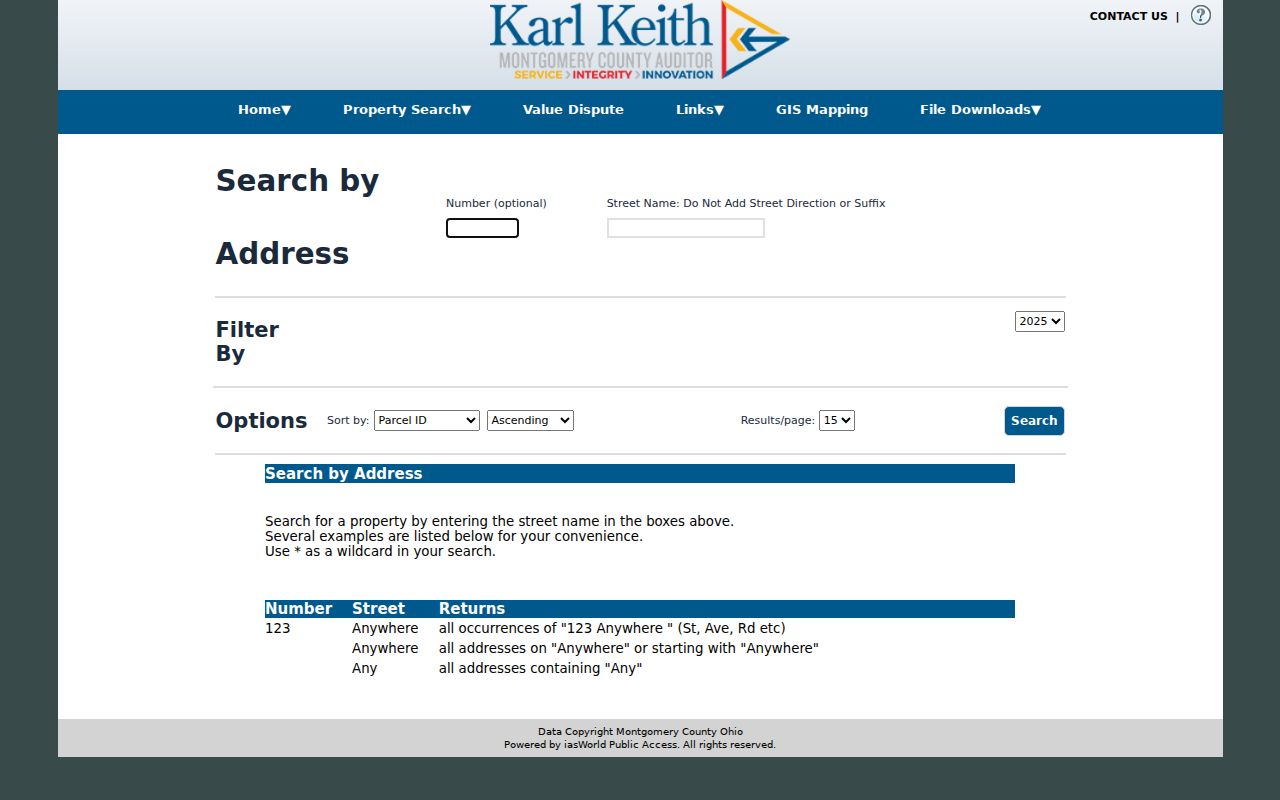
The Auditor page shows its separate street fields and result controls.
Riverside Resident Deed Records
RISS is the Recorder's free guest system. It opens after a legal disclaimer. Treat it as an index. The Riverside-facing search splits into name, type, municipality, subdivision, section-township-range, instrument, book and page, fiche, pre-1980, date, certified-date, and veterans-graves modes. In a name search, enter one surname or firm. Limit the date when possible. Party, date, type, and instrument details can then lead to a deed copy or an earlier recorded party.
Service-discharge images stay out of public view. A missing image does not make an index entry private or false. The Recorder directs anyone who finds a DD214 reference to call 937-225-6381 for a free copy. Certified copies follow the office copy route and fee schedule rather than the free online query. The Recorder's RISS gateway is where guests accept the terms and reach the different search modes.
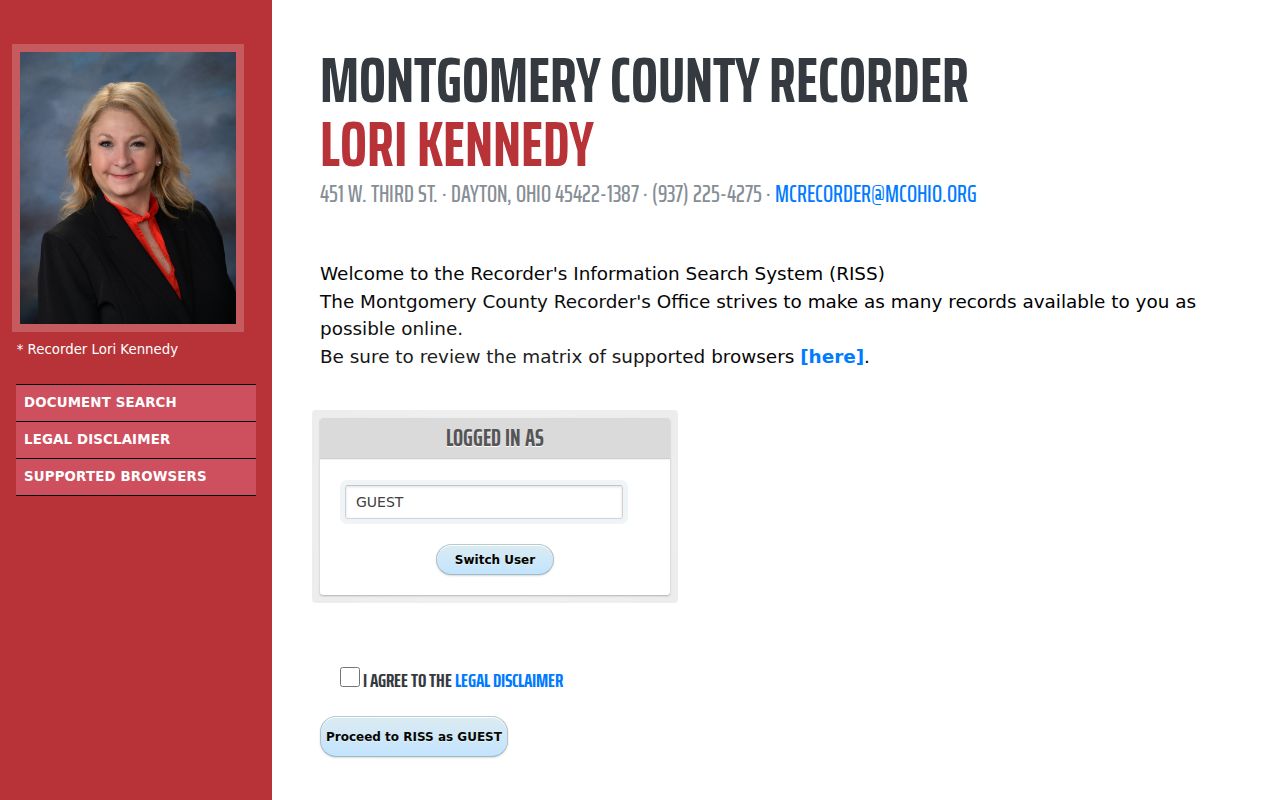
RISS anchors the Riverside residents directory side of recorded documents. It names parties to instruments, not residents of a listed address.
Current Riverside Resident Directory Sources
Evidence about current Riverside residents is scattered. Each record has its own limits. The Auditor supplies a property and tax anchor. Ohio's voter tool confirms one named elector's registration and precinct once the required fields are filled in. Court, permit, and city-request records can add a dated connection, though none adds up to a household roster. Choose the source by the exact question, then preserve the date and identifier it returns.
| Source | Who It Lists | Keeper | Access |
|---|---|---|---|
| Auditor real-estate card | Parcel owner and tax context | Montgomery County Auditor | Free read-only portal or counter |
| Ohio voter lookup | One registered elector and precinct | Secretary of State | Free named-person search |
| Recorder RISS | Recorded-document parties | Montgomery County Recorder | Free guest index, copies separately |
| Riverside iWorQ | Permit or code-case metadata | City of Riverside | Public portal; details can need an access code |
| Clerk PRO | Court case parties and docket context | Montgomery County Clerk | Free public search, counter for gaps |
Match the tool to the question. The Auditor answers a parcel question, RISS a recorded instrument. The voter tool verifies a person already identified. Several names might belong to one person. The Riverside resident lookup process keeps the date, middle name, address, and record class in view. City staff listings are institutional contacts, not a layer for finding people.
Riverside Voter Lookup Rules
Ohio runs its registered-elector records through a name-based system. The Ohio Secretary of State voter lookup asks for a first name, a last name, and a county. Anyone searching for Riverside should pick Montgomery County from that list. When a plain name search comes back empty, the state's own tips suggest trying a shorter given name, a former surname, or an address and county where the person was previously registered. Some result paths then make you choose a street to pin down a single match. The tool confirms one elector's registration and precinct at a time. It will not let you browse a whole block of Riverside neighbors.
Registration records themselves are public, with exceptions set by R.C. 3503.13. The state's DATA Act page adds daily county snapshots kept for at least 22 months. Custom date ranges queue by email. Treat a snapshot as a dated public file. Do not treat it as a live confirmation of any single voter.
Before you submit a Riverside name, open the state voter-search form. See the identity fields it demands.
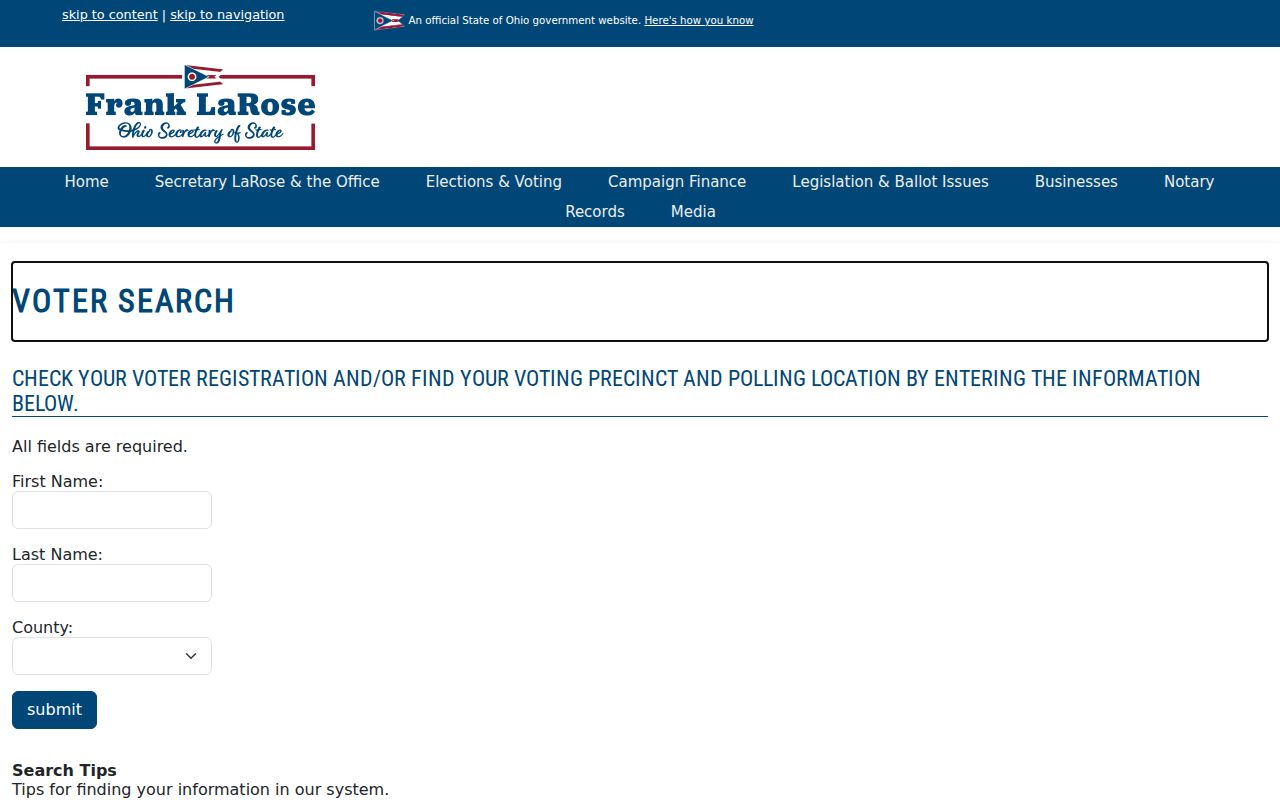
That county field explains the trick: a Riverside search runs under Montgomery, not the city's own name.
Riverside Resident Record Checks
Court records for Riverside sit in one county-wide portal. The Clerk of Courts' Public Records Online v3 pulls together Common Pleas General and Domestic Relations, Montgomery County Municipal, and Second District Court of Appeals cases. Riverside's municipal territory belongs to the Eastern Division, which also covers Huber Heights. That division's counter sits at 6111 Taylorsville Road in Huber Heights. It is open weekdays 8 a.m. to 4 p.m. at 937-496-7231. Read results with care. A party name or docket mention does not prove where someone lives.
PRO cuts off any search at 1,000 results. Add a case type or a date range before trusting a broad name match. Redacted documents and court copies go through the Clerk's records-request route instead. Probate is separate. The Probate Court alone handles estates, guardianships, marriage licenses, name changes, and other listed matters. Adoption and mental-health records stay out of easy reach while those cases remain closed. Treat the PRO public search as a party-and-docket tool. Save the case number for any counter request.
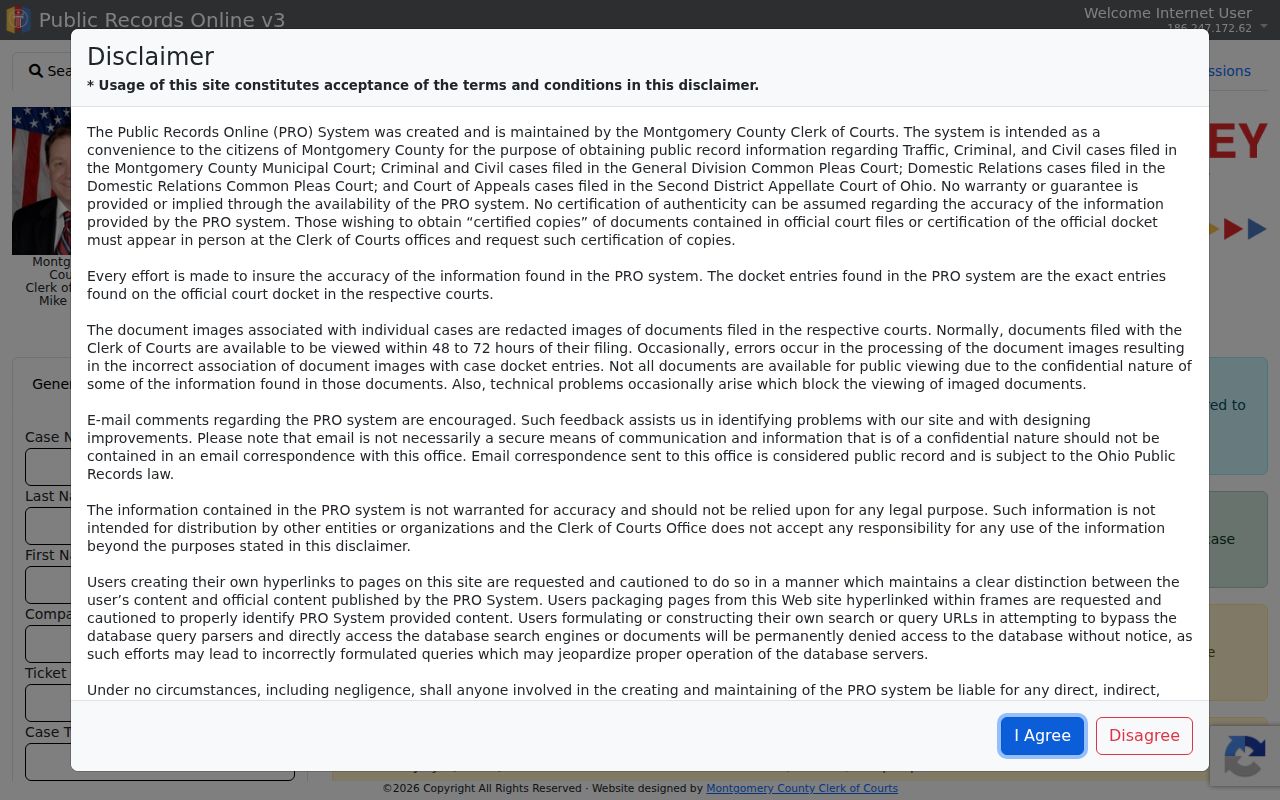
Most Riverside court searching starts in the county PRO portal, because no separate city court database exists.
Riverside Resident Record Requests
Riverside routes its public-records requests by department. A tight request works best: name the permit, certificate of occupancy, inspection report, notice, or final disposition, plus the address and date range. The city's non-police form is another path. It asks for record details and leaves requester identity optional. Under Ohio law, an ordinary public-record request needs no stated reason or identity, unless the office first explains that the information is not required and why it would help.
The Public Records Act, R.C. 149.43, calls for prompt inspection and copies within a reasonable time, permits charging actual copy or delivery costs, and requires that redacted portions be disclosed with a visible notice of the redaction. Ask for a record, not everything about a person. For an odd address history, Riverside planning and zoning can settle an address-assignment question before an old parcel trail gets forced onto a current label. The Riverside request instructions show the custodians and record categories up front.
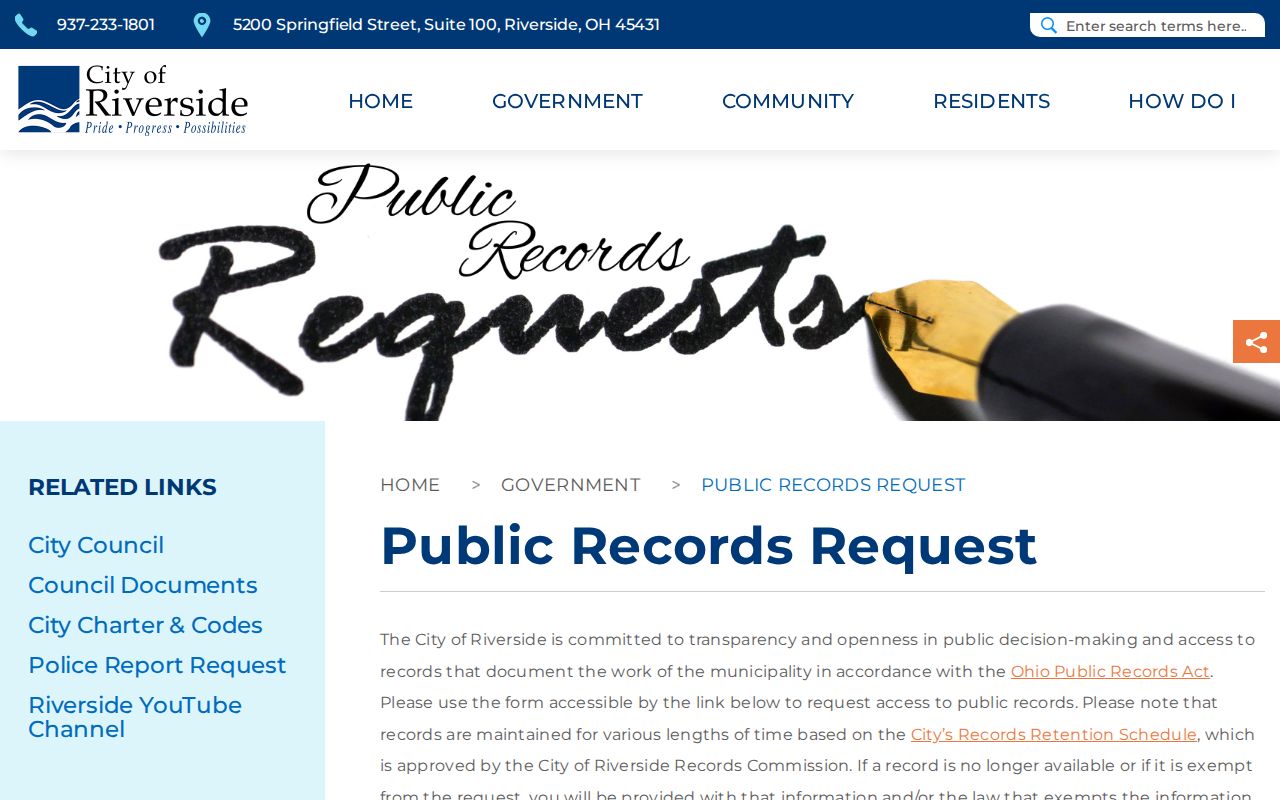
The city route is the fallback for municipal files that no county portal indexes.
Riverside Address Record Clues
Riverside's iWorQ portals cover permits and code cases. Search them by permit or case number, parcel, address, type, date, or status. Some permit details sit behind an access code. City entries can anchor a work or enforcement timeline. But applicants, owners, agents, contractors, and inspection references do not add up to a resident roster. The City has no building department. So building-inspection records live with Montgomery County Building Regulations instead.
That split defines a practical Riverside comparison. iWorQ holds city permit and code metadata, while county channels carry the inspections. A precise request can bridge the two. Use the parcel ID or permit number rather than an unbounded name search. Start at the Riverside permit-status search with a street address or known number.
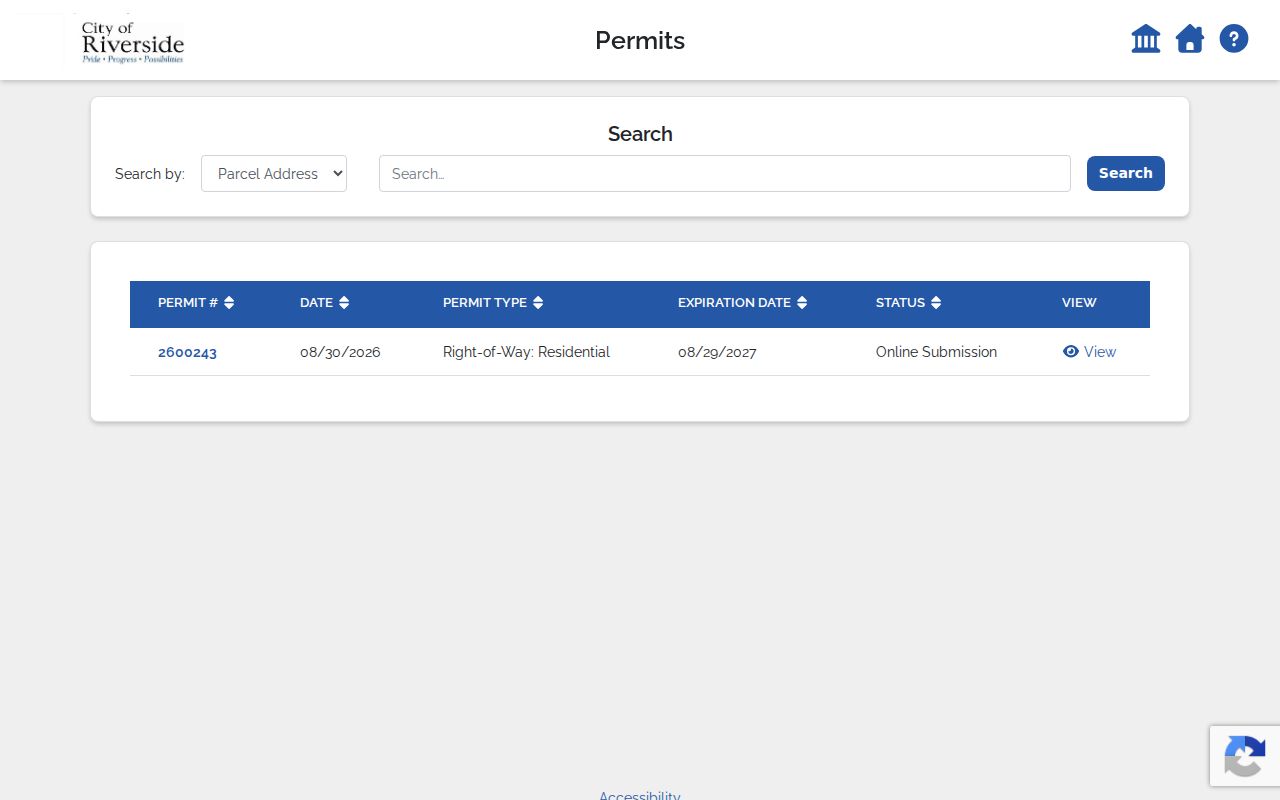
Permit metadata dates a property event but never names everyone who lived nearby.
Historical Riverside Resident Directories
Riverside directory history lives in Dayton and Montgomery County collections. It is not a Riverside-only run of books. Preservation Dayton reports that Dayton Metro Library's Main Branch holds directories from 1850 to current. Address data starts in 1914. The catalog lists Haines Dayton City & Suburban Criss-cross Directory, Odell's Dayton Directory and Business Advertiser, and Polk directory material. Coverage varies by volume. A title page may say Dayton, suburban, township, or regional. The Riverside directory book page walks through the shelf and how to read entries.
The Dayton Room is on the Main Library's second floor. It holds regional local-history material, maps, newspapers, microfilm, research consultations, and genealogy databases. Hours run noon to 4 p.m., Monday through Thursday, with more by appointment. Call 937-463-2665 or email history@DaytonMetroLibrary.org. HOBITS, the Dayton obituary and genealogy index, gives citations rather than obituary text. The library takes up to three copy requests at once with a full citation. Begin with the Dayton Room history and genealogy resources to confirm a volume, date, and access method.

Regional shelves hold the documented history. When a Riverside household is missing from modern web indexes, these older collections are the proven path.
Riverside Names Before the City
Older Riverside records can carry labels that predate the city itself. Mad River Township and the Village of Riverside merged in 1994. Riverside became a city the next year, in 1995. A genuine historical entry may therefore sit under Mad River Township. Others appear under Village of Riverside, under a road name, or inside broader Dayton suburban coverage. Never relabel an original source to make it look current. When an old street address clashes with today's city label, start from the parcel's legal description. Then check its map context.
County record series stretch back much further. The Records Center guide lists deed name indexes covering 1805 to 1928. Tract and legal-description indexes span 1805 to 1986. Marriage indexes start in 1803. The guide also holds estate indexes and dockets. The archive's computer-assisted research index points to more than 47,000 record locations. A narrow request works best. Give staff a name, a date, a legal description, or a book reference as a starting point.
Review the Ohio Public Records Act source before sending a focused request. Then use the Historical Records Collection Guide. Pick the series that matches the era you need.
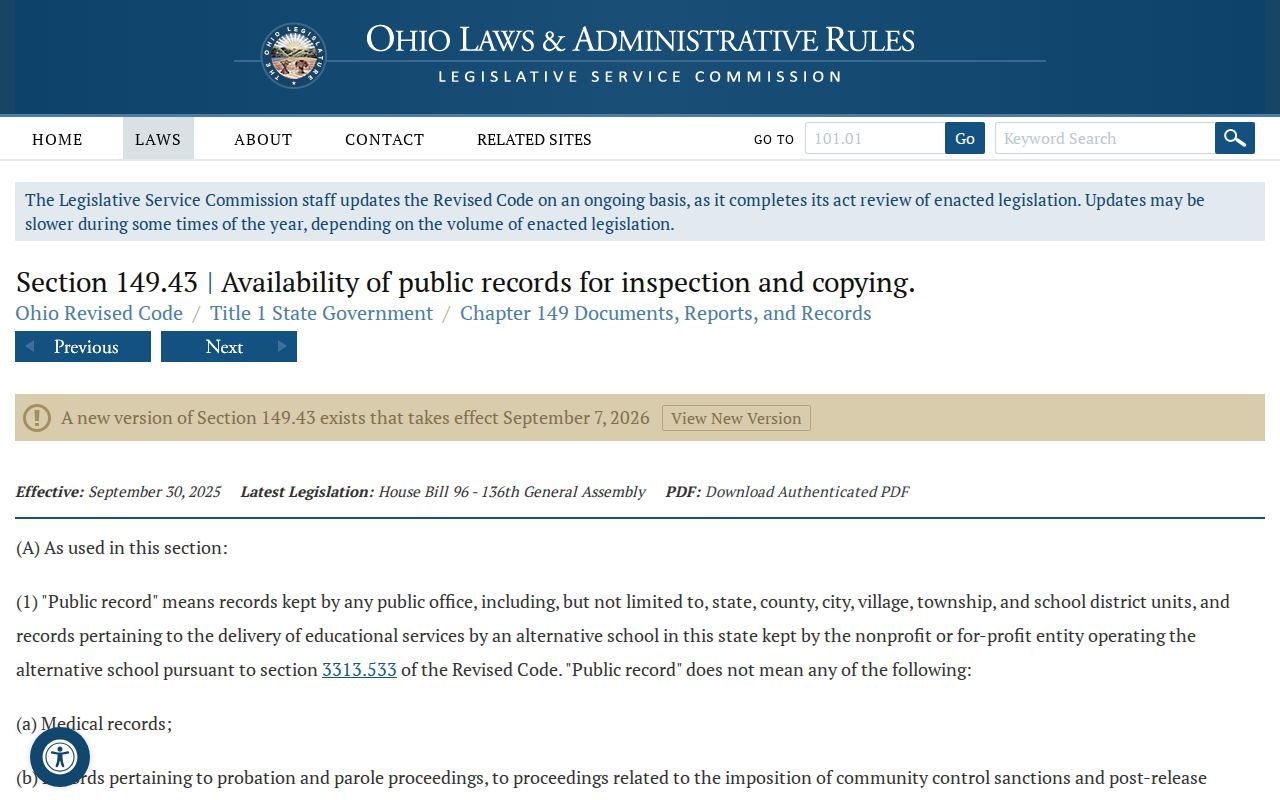
The statutory route covers nonexempt records. The archive route handles the historical volumes that sit outside any current portal.
Riverside ZIP and Address Checks
A postal ZIP describes delivery geography, nothing more. It sets no city boundary and proves nothing about who lives at an address. Riverside's current City Hall carries 45431, while older city and police references show 45424, and a Riverside-adjacent postal edge also touches 45432. Matching ZIPs therefore do not guarantee matching city limits, tax jurisdiction, or household membership.
The right first step is a specific address check. The USPS ZIP Code Lookup takes a street address, city, and state and returns delivery information for that one address. It does not verify a person. County property portals offer no ZIP-wide people search, so treat the ZIP as an address validator and move from there to one Riverside parcel at a time.
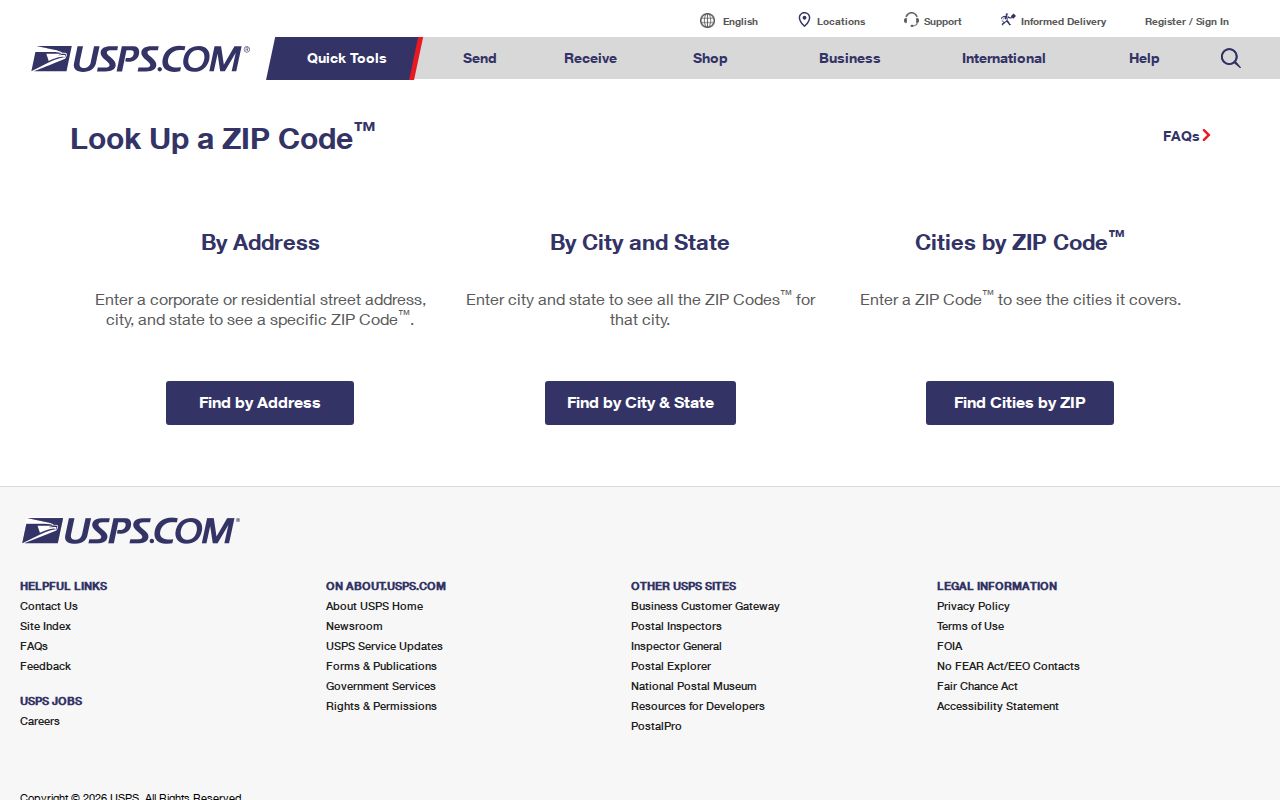
USPS resolves the delivery ZIP for an address, not city residence or parcel ownership.
Riverside Privacy Boundaries
Some record paths end at a legal wall. Ohio Safe at Home participants have protected identifying information excluded from public-record disclosure under R.C. 111.41 through 111.47. Court protection records, juvenile matters, medical material, adoption material, protected voter information, driver data, utility accounts, and delivery information each carry their own limits. No lookup result justifies pressing past a protected person. Nor should anyone infer a whole household from a parcel owner, permit applicant, ZIP, or court party.
Lawful personal research only. Riverside records can support family history, estate research, civic questions, or a property trail. Using information to stalk, harass, intimidate, or harm a person is prohibited.
- Parcel
- A county-defined tract tied to a tax identifier, not a list of everyone at the location.
- Situs address
- The physical location of a parcel, distinct from a tax mailing address.
- Index
- A searchable pointer to a record; it may not include the image or a certified copy.
- Criss-cross directory
- A directory arranged by address, used to find a listed name near a particular street number and year.